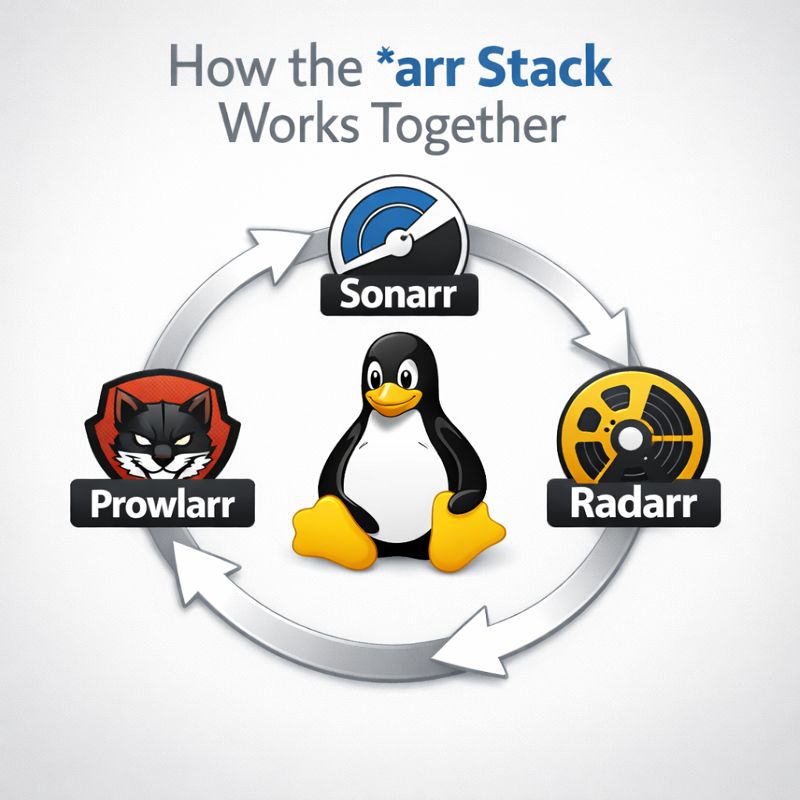
If you’re running a self-hosted media setup, Sonarr, Radarr, and Prowlarr are usually mentioned together — but it’s not always obvious why. They aren’t redundant, and they don’t do the same job. Each one handles a specific part of the pipeline, and when wired correctly, the whole system mostly runs itself.
arr-stack
How to Install Prowlarr
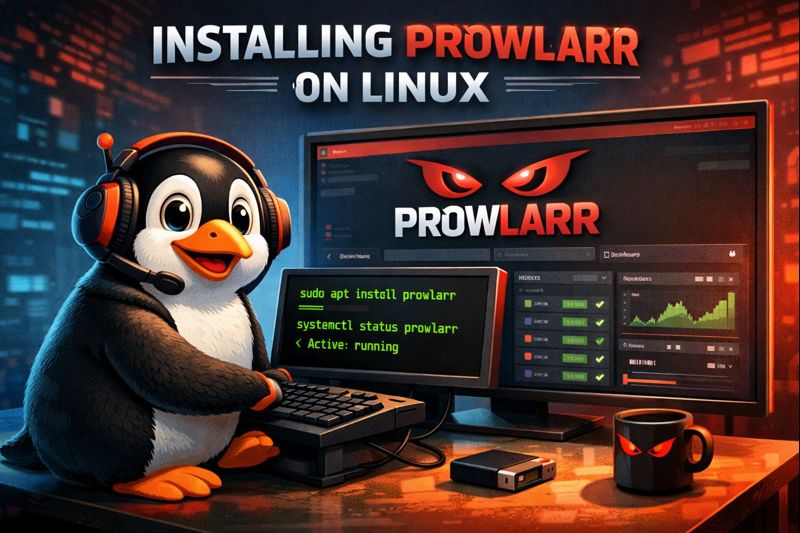
On a Linux-Based System
If you’re running a media automation stack on Linux, Prowlarr is one of those tools that quietly makes everything else less painful. It centralizes indexer management for Sonarr, Radarr, Lidarr, and friends, so you’re not reconfiguring the same indexers over and over again.
This post walks through how I install Prowlarr on a Linux-based system using the official method. I’m assuming you already have a basic Linux install up and running. If not, start with A Beginner’s Guide to Linux before continuing.