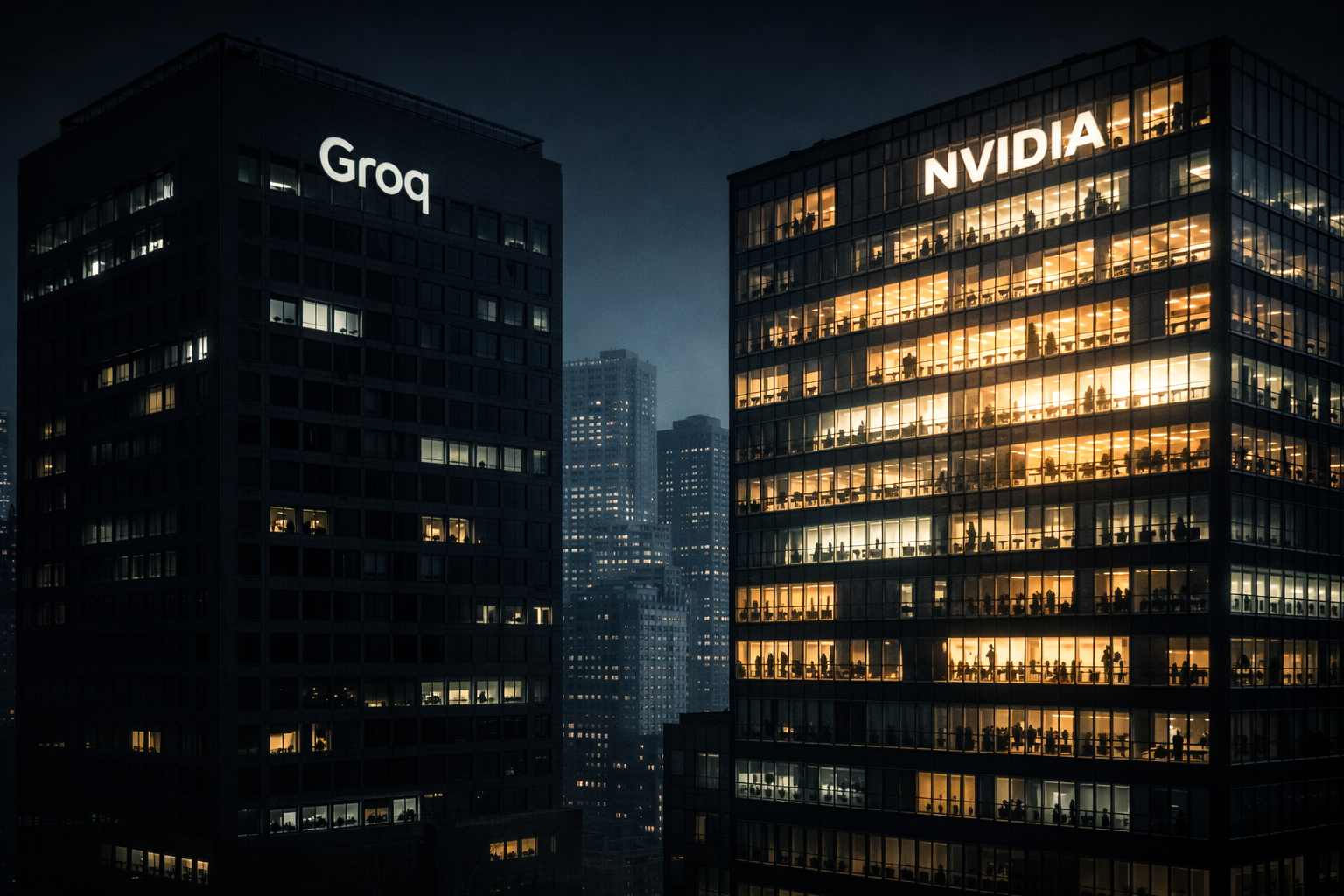
A Hire and License Strategy Explained
The idea of Nvidia acquiring Groq has gained traction not because of a traditional acquisition announcement, but because of how the deal has been described publicly. Recent reporting suggests Nvidia is not buying Groq outright, but instead absorbing critical assets in a way that achieves the same competitive outcome.
This article examines that approach through the lens of what is referred to here as HALO.
What HALO Means in This Context
In this analysis, HALO refers strictly to a hire and license only strategy centered on asset acquisition rather than full corporate ownership.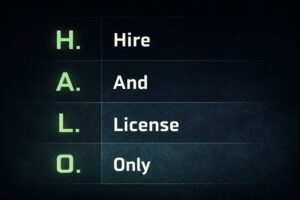
Under this model, Nvidia hires top executives and core engineers, acquires or licenses key technology assets, and leaves the original company legally intact. This is not a traditional acquisition of the company itself.
With the talent and licensed or acquired assets in hand, Nvidia can recreate and integrate the technology internally. The remaining company continues to exist, but without the leadership, institutional knowledge, or technical depth required to compete at scale.
The result is effective neutralization without formal ownership, avoiding the regulatory exposure of a full acquisition while achieving the same competitive outcome.
What Makes Groq a Real Threat
Groq is not just another AI accelerator startup. Its hardware is purpose built for deterministic, ultra low latency inference. That makes it particularly attractive for real time workloads where GPU based inference is not always ideal.
Inference is the most sensitive pressure point for Nvidia. Training dominates headlines, but inference is where long term deployment volume, customer lock in, and recurring revenue live.
Why Nvidia Would Avoid a Traditional Acquisition
A full acquisition of Groq would almost certainly draw antitrust scrutiny. Nvidia already dominates the AI accelerator market, and regulators are increasingly wary of consolidation in this space.
A hire and license strategy avoids that problem. Nvidia gains the people and the technology without technically absorbing the company.
Reports of Nvidia Paying Approximately $20 Billion for Groq Assets
Reporting published by BeInCrypto and syndicated through Yahoo Finance indicates that Nvidia has agreed to pay approximately $20 billion to acquire assets from Groq.
Yahoo Finance report on Nvidia acquiring Groq assets
Notably, the report does not describe a full acquisition of Groq as a company. Instead, it emphasizes asset acquisition, reinforcing the idea that Nvidia is targeting technology, talent, and strategic capability rather than corporate ownership.
This structure aligns closely with a HALO style hire and license strategy, where Nvidia absorbs what it needs while leaving behind a weakened corporate shell.
How HALO Would Apply to Groq
Applied to Groq, the HALO sequence is straightforward.
- Hire Groq executives and senior engineers with aggressive compensation
- Acquire or license Groq technology assets
- Recreate the architecture internally using Nvidia processes
- Integrate the concepts into future Nvidia silicon and software
Groq the company may continue to exist, but without the people or assets required to compete at scale.
The Acqui Neutralization Effect
HALO functions as acquisition without ownership.
Nvidia does not need Groq as a standalone entity. It needs Groq not to become a dominant inference platform that challenges Nvidia control of the AI compute stack.
By absorbing talent and assets while avoiding a formal takeover, Nvidia neutralizes the threat while minimizing regulatory risk.
Why This Matters Beyond the Data Center
When competitors are removed through asset absorption rather than acquisitions, the outcome is harder to see but no less impactful. Fewer real alternatives reach scale. Pricing power remains concentrated. Innovation slows.
Although this happens at the data center level, the effects ripple into cloud pricing, enterprise AI costs, and eventually consumer hardware.
Final Take
Nvidia acquiring Groq through HALO is not a traditional buyout. Based on public reporting, it appears to be a hire and license driven asset acquisition designed to neutralize a competitive threat.
The real question is not whether Nvidia bought Groq. It is whether this approach leaves any meaningful competitor behind once the assets and people are gone.
Want to read more? Check out Why Nvidia Wants Out of the GPU Game.
1 thought on “Nvidia Acquiring Groq Through HALO?”